In the fast-changing world of 2026, the digital marketing “playbook” from just a couple of years ago feels outdated. With AI-powered search engines like Google SGE and Large Language Models reshaping how people discover information, old-school keyword stuffing isn’t just useless anymore—it’s actually holding you back. To stay ahead, you need to look where others aren’t. There are many underrated tactics in online marketing, especially in SEO, which, if implemented properly, can offer you incredible results. So, here are the top 10 underused SEO marketing strategies by Adivorous, the leading digital marketing agency, that can give you a massive edge this year.
1. SEO Marketing Strategies: Answer Engine Optimization (AEO)
Whether it’s Google’s own Gemini, OpenAI’s ChatGPT or Perplexity, all of these advanced chatbots are changing how we interact with the internet. Thus, while SEO focuses on ranking links, the newly developed AEO now focuses on providing the direct answer that AI agents like Claude, Deepseek, Copilot, and other mentioned synthesize for users. But the problems arise from why it’s underused if AOE is so important?
Well, most marketers are still chasing clicks, but in 2026, appearing as the “cited source” in an AI overview is the new “Position Zero.” Many of the marketers are simply scared to change the tried and tested tactics. But AI is the emerging technology that is here to stay and change everything. Thus, structure your content into “Answer Blocks”, concise, 50–70-word summaries at the top of your articles that directly address a specific query.
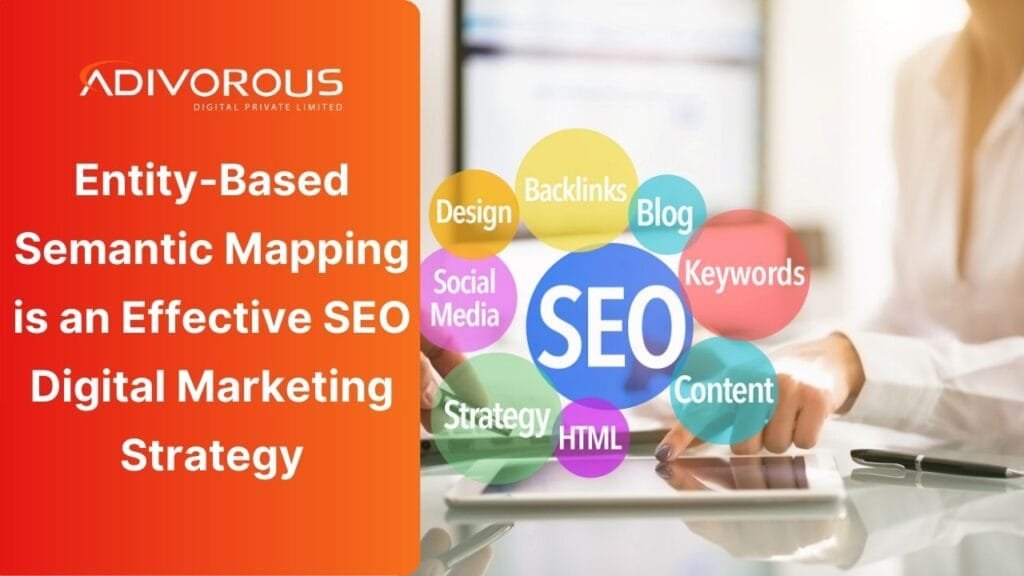
2. Entity-Based Semantic Mapping is an Effective SEO Marketing Strategy
Search engines have evolved beyond simply searching for individual words; they now focus on entities, such as people, places, and things, along with their relationships. Therefore, instead of targeting a keyword like “running shoes,” consider creating a topic cluster that links related entities, such as “marathon training,” “arch support,” and “carbon-plate technology.”
Additionally, implement internal linking and schema markup to demonstrate to search engines that you have a comprehensive understanding of the entire ecosystem surrounding a topic, rather than just a single term. This might be the most basic tactic in SEO marketing, yet it is the most overlooked aspect in the broader SEO marketing strategies.
3. Visual Asset Backlinking or The “Stock Photo” Hack
Remember, nowadays, link building is getting harder as AI generates generic content. Therefore, high-quality, original data visualisations and photography are now “gold.” Create high-value, niche-relevant charts or original photos and upload them to platforms like Unsplash or Pexels with a request for attribution. By doing so, you’ll earn passive, high-authority backlinks from news sites and blogs that use your visuals to illustrate their stories. These are highly-underrated feature that can make your SEO effort even more fruitful.
4. Agentic Readiness (Optimizing for AI Agents)
In 2026, AI “agents” are now booking hotels and buying products for users. If your site isn’t “readable” by these agents, you don’t exist. New gen browsers like Comet from Perplexity, Atlas by OpenAI and Disco by Google, which already has a monopoly in this market with Chrome is changing internet interaction forever!
So, you need to implement advanced Schema Markup, for instance, classify product, offer, privacy policy, merchant return policy, etc. Also, ensure your pricing and availability are in plain text, not hidden behind toggles or scripts. After all, keep in mind, if an AI agent can’t verify your price or shipping time in milliseconds, it will recommend a competitor that it can verify.
5. Hyper-Local “Micro-Market” of SEO Marketing Tactics
Standard local SEO is as we know, goes something like this: “Lawyer in Kolkata.” However, hyper-local SEO is “Personal injury attorney in Canning Street.” Search is more than keyword now, as we have already hinted at. It is more personalised, context-aware and in general, way smart. They don’t depend entirely on the keyword but on the intent and the user’s expectation from the enquiry.
Therefore, as an SEO marketer, you need to create neighbourhood-specific landing pages that mention local landmarks, community events, and specific street intersections. Provide more granular information that the modern AI can collect. Remember, as AI search becomes more “agentic” and mobile-first, it will prioritise extreme proximity over general city-wide relevance.
6. Interactive “Zero-Click” Combatants
Google is answering more questions on the search results page, meaning users don’t need to click your link. To get them to your site, you need to offer something AI can’t: utility. Which means you need to give them an enticing reason to click your link instead of just reading the AI-generated answers.
To make your SEO marketing more effective, build interactive tools like ROI calculators, custom quizzes, or 3D product configurators. Show them that your site offers more than just a generic answer. After all, a user might get the answer from an AI overview, but they need to visit your site to use the tool.
7. Video Transcript Optimization: SEO Marketing is Present Everywhere
Search is no longer just on Google; it’s on TikTok, YouTube, and Instagram. Every platform is now an SEO platform as long as you know how to properly implement SEO digital marketing strategies. So, to begin with, don’t just upload a video but embed the full, timestamped transcript on your blog page alongside the video.
This allows search engines to index the spoken content of your video, making you discoverable for highly specific phrases mentioned mid-video. Apart from these underrated strategies, there are even more overlooked tactics, which, if used perfectly, can bear fruit in your favour in no time! Let us look at some of the remaining strategies below:
| 8. Intent Segmentation via Customer Transcripts | Many FAQ sections are created by marketers who assume they know customer questions. Instead, analyse your customer support transcripts and chat logs for actual customer phrasing. Use these real, messy questions as H2 headers to capture long-tail “Natural Language” queries that typical keyword tools overlook. |
| 9. Log File Analysis for Crawl Efficiency | For larger websites, the biggest challenge is often the crawl budget. Regularly analyse your server logs to identify where Googlebot is wasting time, such as on “dead ends” or low-value pages. Fixing these crawl errors can improve your indexing speed by 20-40%. |
| 10. Branded Search Cultivation | In a world full of AI-generated noise, brand trust is the ultimate ranking signal. That’s why running demand generation campaigns, like podcasts, guest spots, and social series. This gets people searching for your brand name associated with a keyword. A high volume of branded searches signals to search engines that you’re an authority, which can indirectly boost your rankings for related non-branded terms. |
Conclusion
As you can see, when you run into a wall and fail to get the much-needed traffic, do not blame the incompetence of SEO marketing. What you need to do is change your own marketing tactics; instead of running behind flashy marketing campaigns, focus on basic and important aspects of SEO, like what you read in this blog, and we guarantee that you will find meaningful success.
FAQs
- Is traditional keyword research dead in 2026?
- Not gone, just evolved. Keywords have become “entry points.” Rather than chasing a single high-volume word, the focus should be on Search Intent. The aim is to address the purpose behind the search, not just match a string of characters.
- How do I combat the decline in clicks due to “Zero-Click” searches?
- Prioritise creating “stickiness” by offering something beyond what an AI summary can deliver—think interactive tools, exclusive downloadable resources, or engaging community forums. Use the AI overview as a teaser that entices visitors to explore the richer, more immersive experience on your site.
- What is the biggest technical SEO mistake brands make today?
- Ignoring crawl efficiency can be a big mistake. Many sites have thousands of thin or duplicate pages, like outdated tag pages or filtered search results, that waste their crawl budget. If Googlebot spends all its time on these low-value pages, it won’t have the resources to discover your high-converting new content.
- How does “Experience” (the extra E in E-E-A-T) impact my rankings?
- AI can gather information, but it can’t truly “experience” a product. To stand out today, your content needs first-hand proof—original photos of you using the product, personal stories, or unique data from your own experiments. This kind of “lived experience” is what sets human content apart from AI-generated noise.