Everyone’s heard the sayings “content is king” and “consistency is key.” If you’ve spent even a few minutes in the digital marketing world, those phrases are probably burned into your brain. Beneath the buzzwords and best practices lies a history and a psychology that often goes unnoticed. From the unexpected origins of the “Like” button to the jaw-dropping success of the first banner ad, the digital world is stranger and more captivating than most people think. So, here are 10 unknown facts about digital marketing and social media marketing by Adivorous that might just change how you plan your next campaign.
1. The First Banner Ad Had a 44% Click-Through Rate
These days, a display ad click-through rate (CTR) of 0.1% is seen as decent. But back in 1994, when the first-ever banner ad appeared on HotWired.com, it completely changed the advertising landscape. The ad was for AT&T and simply asked, “Have you ever clicked your mouse right here? You will.”
It worked, with an impressive 44% of people who saw it clicking. Back then, the novelty of the internet had users clicking purely out of curiosity. Today’s marketers face the challenge of overcoming “banner blindness,” but it’s a simple reminder that curiosity remains the oldest and most powerful hook in digital marketing and social media marketing.
2. LinkedIn is Older Than Facebook
When we think of the original social networks, MySpace or Friendster often come to mind. But among today’s active giants, LinkedIn is the eldest sibling. LinkedIn was founded in December 2002 and launched in May 2003, nearly a year before Mark Zuckerberg rolled out “The Facebook” in February 2004.
While Facebook raced ahead, breaking things and moving fast, LinkedIn steadily built the web’s professional infrastructure and remains the only platform from that era to preserve its original purpose without undergoing a massive identity crisis. However, the platform remains a powerful tool for digital and social media marketing for B2B purposes.
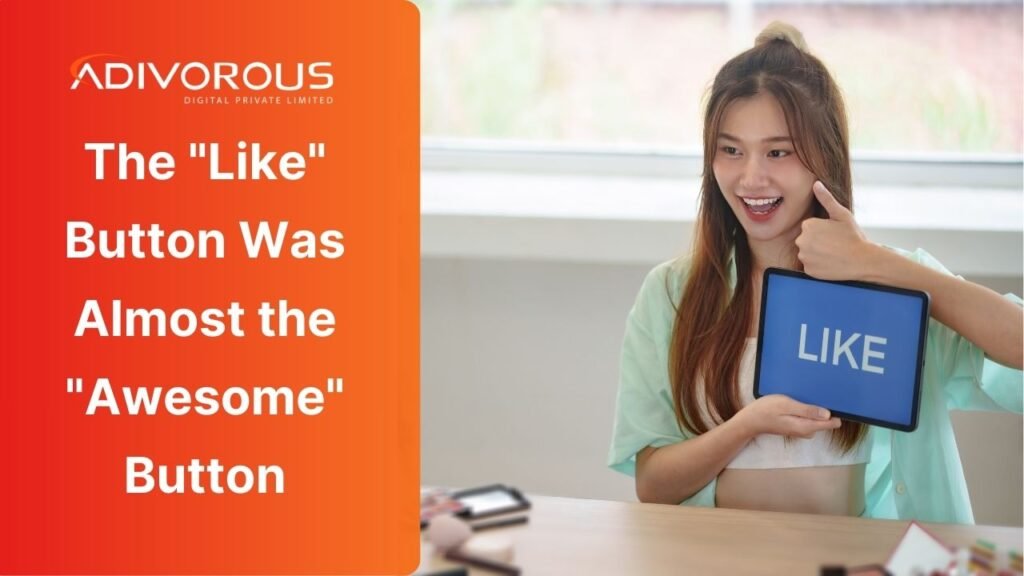
3. The “Like” Button Was Almost the “Awesome” Button
Can you imagine “Awesoming” a photo of your friend’s brunch? It almost happened. In 2007, Facebook engineer Andrew Bosworth shared that the now-iconic feature was originally codenamed “Props.” Mark Zuckerberg initially wanted to call it “Awesome” instead of “Like,” but the team ultimately chose “Like” for its more neutral and universal appeal. After all, “Awesoming” a sad news post just wouldn’t have felt right. Later, the ‘like’ button was expanded into different emotion buttons to fit the context of the posts.
4. 85% of Facebook Videos Are Watched Without Sound
Spending hours searching for the perfect background music for your social ads could be a waste of time. Because studies show that up to 85% of videos on Facebook are watched without sound. Which pushing marketers to rethink how they edit content. If a story doesn’t work without audio, the viewer is already gone. That’s why captions and bold typography have become essential visual tools in today’s video marketing. However, do not post your reels or videos without background music at all; after all, it is an integral part of digital marketing and social media marketing.
5. 90% of SEO Content Gets Zero Traffic
This is the kind of statistic that makes SEO professionals lose sleep. A massive Ahrefs study found that 90.63% of all pages in their index get absolutely no traffic from Google. Yes, zero, none. Why? Most content out there is either duplicated, missing backlinks, or focused on keywords no one is actually searching for. It’s a tough reminder that “publishing” isn’t the same as “marketing.” Without a solid distribution plan or proper SEO research, you’re basically just shouting into the void. That is why you need a veteran digital marketing and social media marketing agency like Adivorous to use SEO that actually has a solid ROI.
6. 15% of Daily Google Searches Are Brand New
It might seem like everything worth searching for has already been found, but that’s far from the truth. Google says that 15% of the searches they handle each day are brand new, showing just how quickly language, trends, and human curiosity evolve. For marketers, this means there’s no such thing as a “perfect keyword list.” It’s all about staying flexible and adapting to fresh queries, especially those shaped by voice search and AI.
7. The “F-Pattern” Rules Human Attention
NO, it is not what you think. Digital marketing isn’t just about the message; it’s also about its placement. Eye-tracking research by the Nielsen Norman Group found that people tend to scan websites in an F-shaped pattern. People tend to focus on the top headline horizontally, glance down to a shorter sub-headline, and then scroll vertically down the left side. If your Call to Action (CTA) is tucked away in the bottom right corner, also known as the “dead zone”, you’re probably missing out on conversions.
8. Micro-Influencers Have Higher Engagement Rates
Bigger isn’t always better. While celebrities have huge followings, their engagement rates can be shockingly low, sometimes under 1%. This is something we are not just saying. Research shows that micro-influencers with 1,000 to 100,000 followers often enjoy engagement rates about 60% higher than macro-influencers. Their audiences tend to be more niche, more loyal, and see them as a “friend” rather than a distant star. For brands, this means spending less for a more genuine connection in their digital marketing and social media marketing journey.
9. Blue Colour of Logo and UX Design Is No Accident
Have you noticed that Facebook, X (Twitter), LinkedIn, Skype, Dell, HP, and Intel all have blue logos? This isn’t by chance; it’s all about colour psychology. Blue is seen as the colour of trust, safety, and communication. Back in the unpredictable, sometimes intimidating early days of the internet, tech companies needed people to feel confident sharing their data. Blue became the quiet signal that whispered, “You’re safe here.” Even now, as of writing on the WordPress site, there are plethora of blue buttons that are more soothing to our eyes than a red button would be.
The Bottom Line
Digital marketing and Social media marketing are less about “hacking the algorithm” and more about grasping human behaviour. From our need for recognition (the “Like” button) to our natural visual scanning patterns (the F-pattern), the most effective campaigns are those that truly understand the person behind the screen. Many marketers make the mistake of creating content that only appeases the algorithm, but the algorithm only promotes content that appeals to real people.
FAQs
- If 90% of content gets zero traffic, how do I avoid that?
- Don’t just write and hope for the best. Use keyword research tools to confirm people are actually searching for your topic, and actively share your links on social media and in newsletters to grow your authority.
- Is “Banner Blindness” real?
- The average click-through rate has fallen from 44% to about 0.35%. To improve it, try using native ads that blend in with the content and retargeting strategies instead of standard sidebar banners.
- Should I stop using audio in videos since people watch on mute?
- Audio is still important for engagement, but content should be designed to work without it. Use captions and bold visual titles within the first three seconds to make sure the message comes across clearly, even with the sound off.
- Are Micro-Influencers actually better than celebrities?
- When it comes to ROI, usually yes. Micro-influencers with 10k–50k followers often have stronger trust and engagement, resulting in more actual sales per dollar spent than costly celebrity endorsements.
- How do I handle the 15% of Google searches that are brand new?
- Focus on topics rather than just keywords. Craft content that addresses specific long-tail questions, like particular user problems, and keep your older content fresh by adding new industry terms regularly.